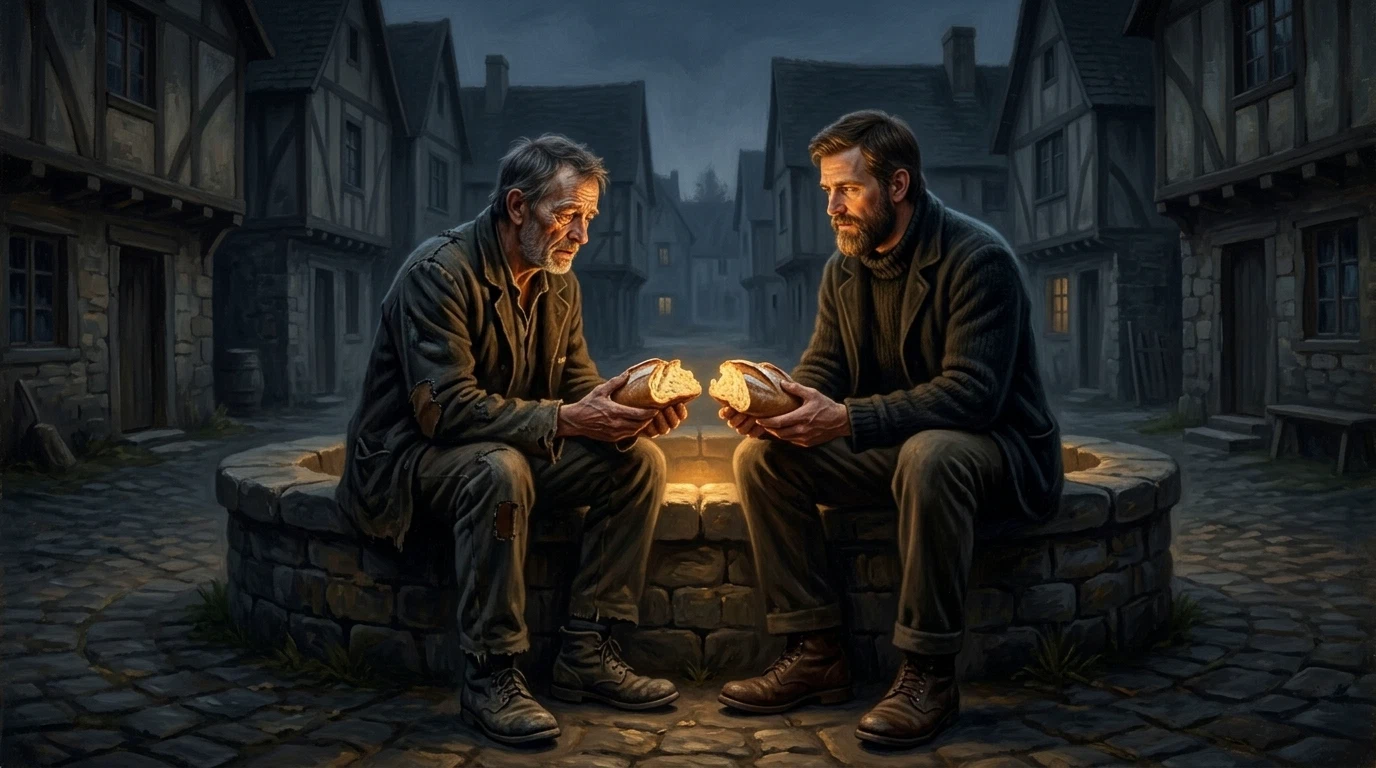
The Boy Who Learned to See in the Dark – Two men sitting by a village well at dusk, sharing a piece of bread

The Boy Who Learned to See in the Dark

If you like, listen while reading: Once upon a time, there was a boy who grew up in a house where the light rarely reached the floor. His hands were still small, yet they already knew how to tremble. His back was still soft, yet he already knew how to hunch when the footsteps outside the door grew heavy. And worse than the blows that could be seen were the sentences that stayed behind. They did not draw a boundary around what he did — they described what he supposedly was: too loud, too little, wrong. ...
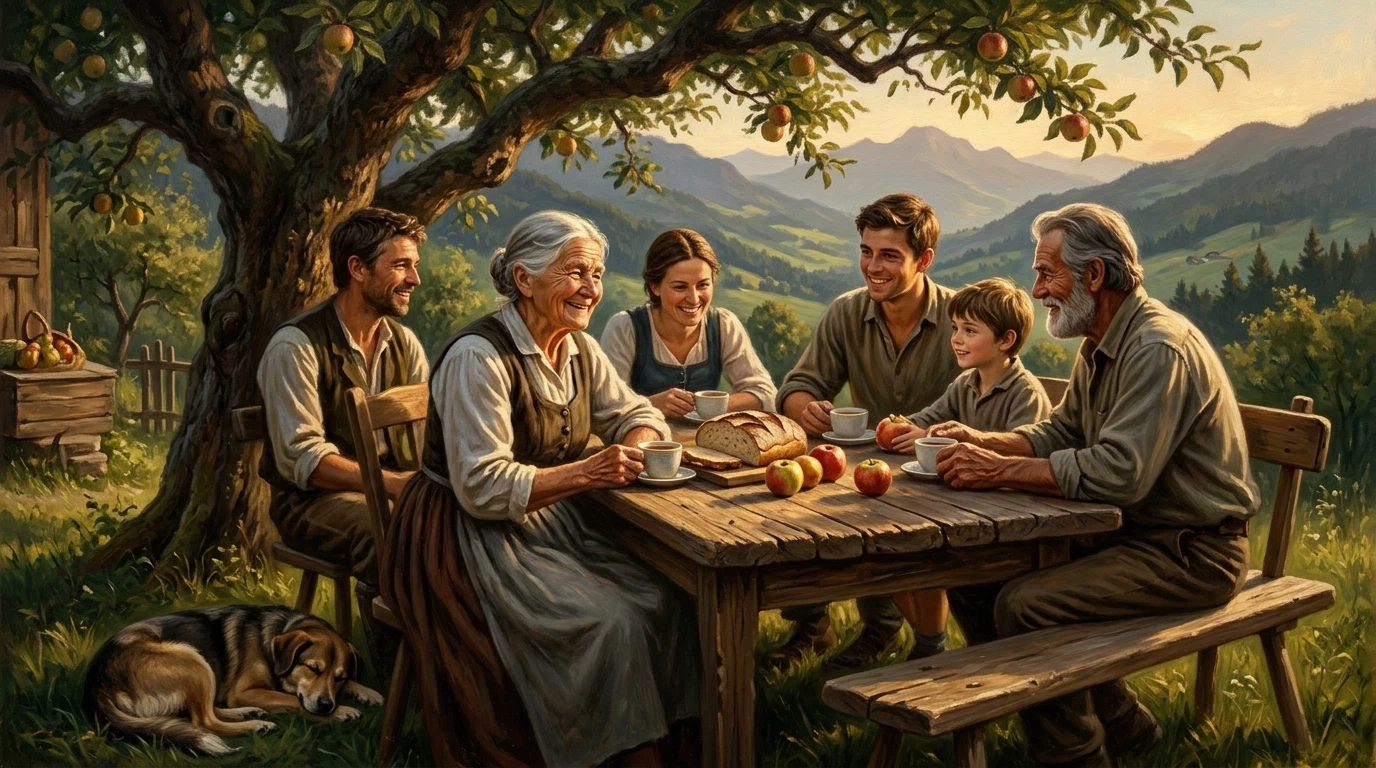
"Zfrieda muss ma si" – A contented gathering around a wooden table with grandma in the warm evening light

"Zfrieda muss ma si" – Why Contentment Is the Opposite of Standstill

Recently, the question of what a perfect world would look like was asked in an online forum. If you follow the political debates of our days, the answer usually sounds like more speed, more growth, sharper edges, or the next grand system overhaul. My answer turned out differently. Quieter. In my perfect village – a region, a country, a continent, or even a world – people are above all one thing: content. ...

Society · October 28, 2026 · 3 min · René Jochum
The Fool – A parable about invisible armour, wolves, and the liberating power of laughter

The Fool

If you like, listen while reading: In a village at the edge of the forest, everyone wore invisible suits of armour made of iron. Whoever wanted to be strong showed no weakness. Only one man did not play along. If you asked him who he was, he grinned: “An idiot and a fool – it even says so on my report card.” Then he laughed, and people quickly walked on. ...

Society · October 24, 2026 · 2 min · René Jochum
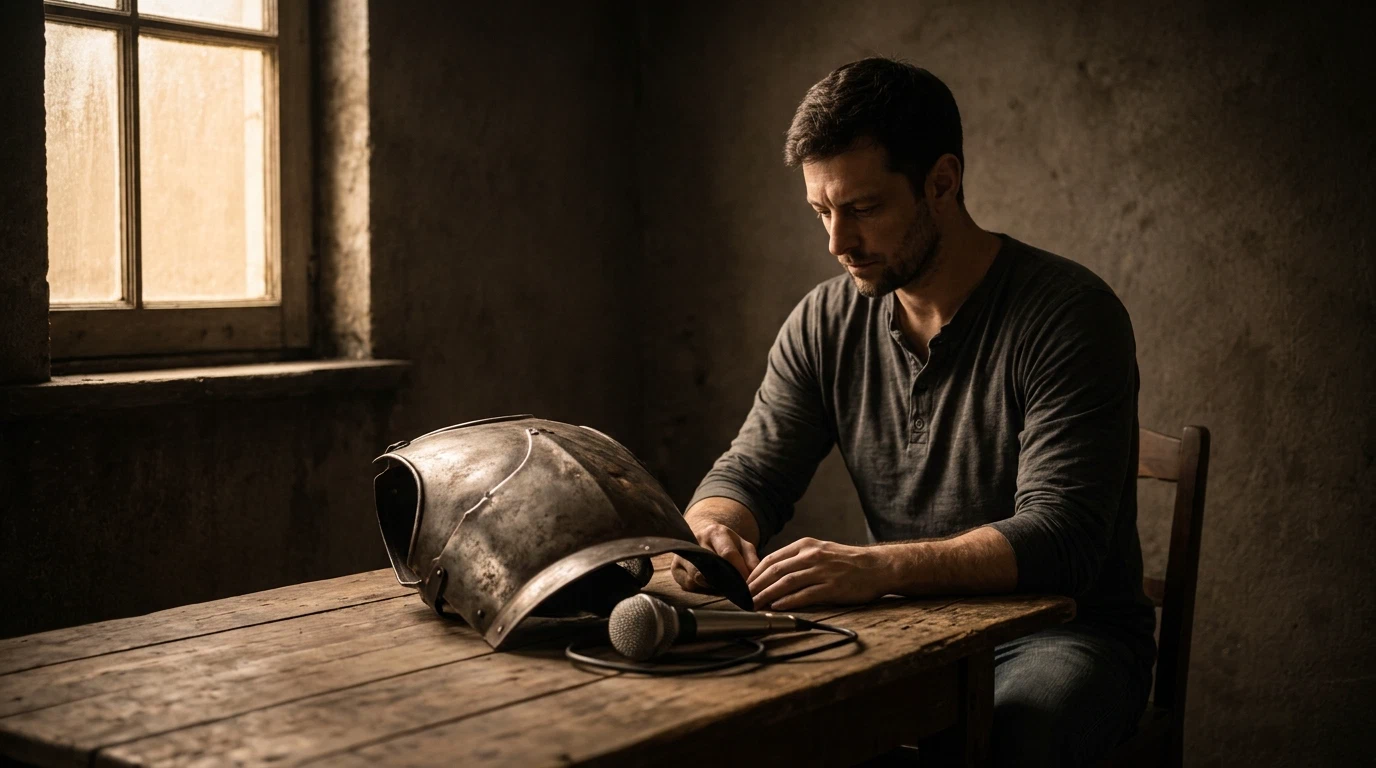
The Strength to Rise Above Yourself – An iron breastplate laid down beside a microphone on a wooden table in warm window light

The Strength to Rise Above Yourself

Why we fall silent when life hurts – and what freedom lies in taking off our own armour. In extreme cases, silence can be life-threatening. It quietly isolates us from the inside out, gnaws at our self-confidence, and in the worst case costs lives. Why, then, is it still so hard for us to speak up when life hurts? Viewed without blame, our silence is an old suit of armour. Across generations – through wars, poverty, and the hard reconstruction after 1945 – an iron rule of survival applied: pull yourself together and function. Our ancestors had to pack away their pain in order to build the prosperity we enjoy today. Their silence was not coldness, but necessity. ...

Society · October 23, 2026 · 4 min · René Jochum
Uf a nand luaga – Seven Attitudes for a Shared Austria

Uf a nand luaga – Seven Attitudes for a Shared Austria

Note: My personal construct of ideas for seven attitudes. This is not an academic paper, but a conjecture – grown from historical observations, conversations, and experiences I have gathered from all over through the years. If you like, listen while reading: § 1 Togetherness. In times of scarcity, retreating into one’s own group was vital for survival; today we are all in the same boat – whether young or old, whether born here or newly arrived. Instead of falling back into old defensive reflexes of division and confrontation, we use what we in Austria have learned across generations: we bring different interests to one table, seek a viable compromise – and tackle things together. ...

Politics · October 22, 2026 · 10 min · René Jochum
The Hands That Are Not His

The Hands That Are Not His

I think of a fictional person. He is a pacifist — not because he read about it, but because he has experienced violence and rejects it. He comes from a country where men must be strong and are not permitted to show shame. He flees. He arrives here. He carries something with him. The conviction that peace is possible if someone starts it. He wanted to contribute here. Not as a gesture — because he knows what happens when no one does. He has seen where hate leads. He wanted to live the opposite. ...

Society · May 29, 2026 · 4 min · René Jochum
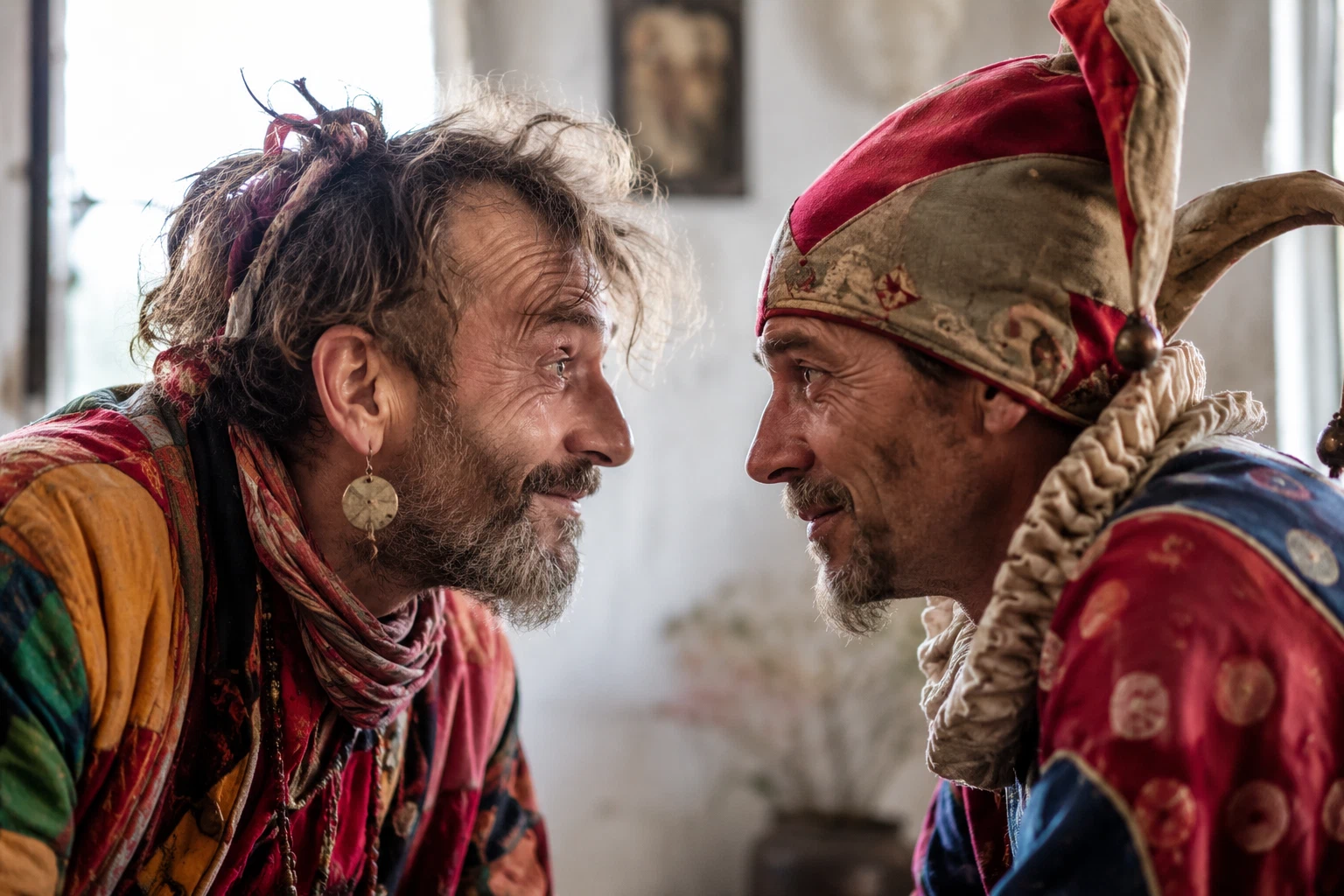
The Fools Who Look at Each Other and Recognise One Another

The Fools Who Look at Each Other and Recognise One Another

If you like, listen while reading: The fool is one of the oldest figures in human history. He goes by many names — shaman, dervish, mystic, court jester. What connects them: an inner freedom that outlasts outer circumstances. He sees differently and speaks what others leave unsaid. He cannot be bought. The fool knows the word no — toward himself and toward others. ...

Society · May 25, 2026 · 2 min · René Jochum
Land of the Masses – When a Society Stops Looking Out for One Another

Land of the Masses – When a Society Stops Looking Out for One Another

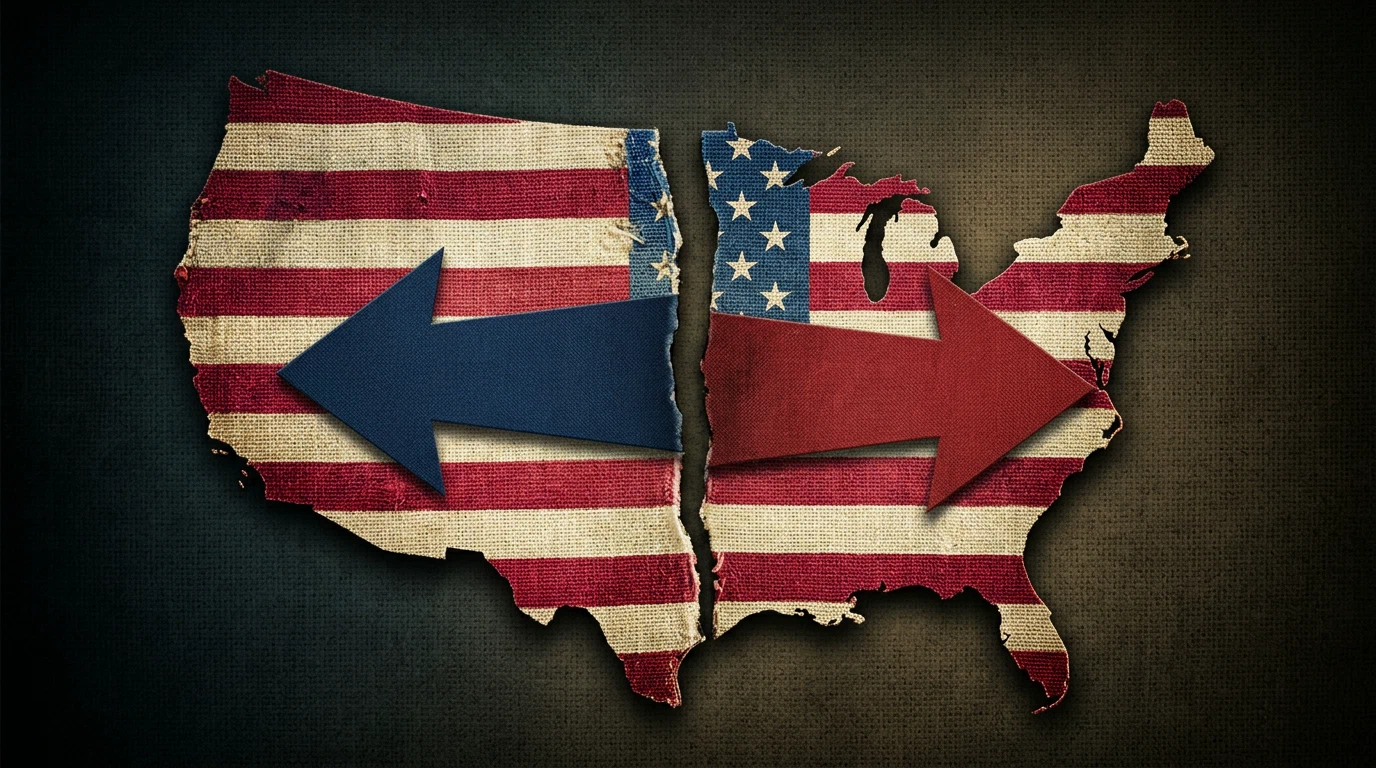
Honest note upfront: I do not live in the United States and, quite honestly, have no idea what everyday life on the ground truly feels like there. This text is purely an observation from afar – prompted by media images that stayed with me – and above all a reflection on why our social peace here at home is so precious. At the White House Correspondents’ Dinner in Washington, an elderly gentleman sat upright and calmly ate his burrata. Outside, gunshots; inside, panic. He stayed seated. Bad back, he said dryly afterwards. New tuxedo, dirty floor. ...

Politics · April 28, 2026 · 3 min · René Jochum

Two Chords and an Amplifier — The Defunct Punk Scene of Vorarlberg

Third part of the series “Rebellion as Civic Duty” The first two articles dealt with the big question: why does France rebel, and Austria does not? With Hofstede and Milgram, with police and media, with systems and structures. This article goes back to the beginning — to the moment when rebellion in Vorarlberg actually happened. Briefly. Loudly. And then it was over. Feldkirch, 1977: Two Weeks to the First Concert At the end of 1977, a few young people came together at the Graf Hugo youth center in Feldkirch. Galle, Franz, Slaughter, and Chy — four guys who had heard about punk in England through the German magazine Sounds and, yes, Bravo. The spark didn’t come from Vienna, not from Innsbruck, and certainly not from any Austrian institution. It came from a Zurich DIY fanzine called “No Fun,” published by Peter Wittwer and Martin Byland. Inside was a sentence from an English punk magazine: “Buy a guitar, learn a C, learn a D, learn an E and join a band.” ...

Society · March 7, 2026 · 8 min · René Jochum

From the Least to Nobody — On the Invisible Damage of Pigeonholing

We sort people. Daily, unconsciously, in fractions of a second. Homeless. Unemployed. Addicted. Failed. The drawer opens, the person goes in, the drawer closes. What’s inside, we no longer see — we only see the label. What the Drawer Does to the Person Whoever is classified first loses their name. Not the one on their ID — the inner one. The name that says: I am someone. I have a story. I have contributed something. ...

Society · March 6, 2026 · 2 min · René Jochum