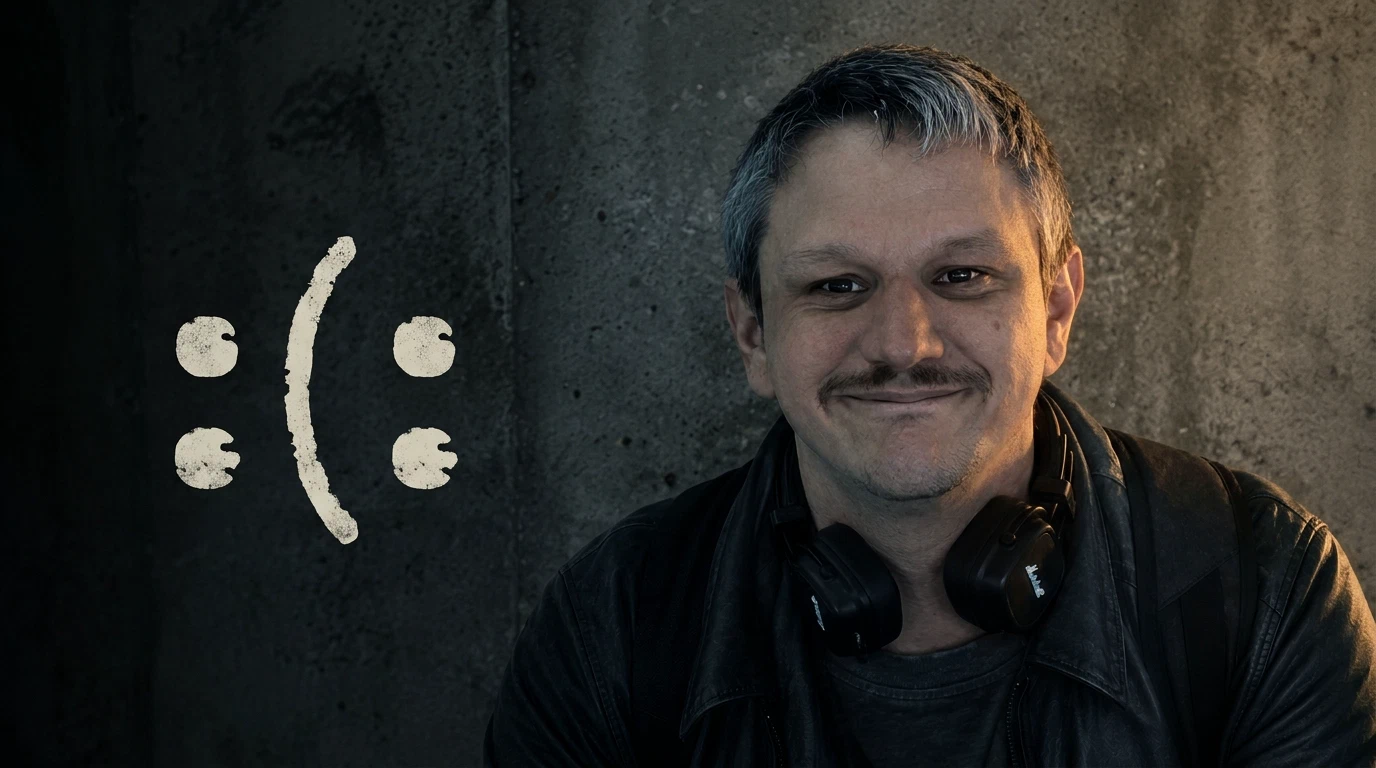
What It Is Like to Live with a Bipolar 1 Diagnosis – Portrait of René Jochum next to the :(: symbol

What It Is Like to Live with a Bipolar 1 Diagnosis – From the Life of Someone Affected

To many people, “bipolar” sounds like a mere swing between good and bad moods. On paper, however, my diagnosis reads Bipolar 1 with psychotic symptoms – and when I am in full-blown mania, it has nothing whatsoever to do with “being in a good mood.” It often starts constructively: I have countless ideas, mostly driven by an honest desire to improve things fundamentally. Yet my head shifts into a speed that hardly anyone on the outside can follow anymore. There is no longer any filter between thinking and speaking – almost every thought has to come out the exact second it arises. At the same time, my short-term memory collapses: what I said days ago, or even just a few moments ago, is erased almost in the same instant. Only this hyper-accelerated Now exists. ...


This Too Shall Pass

This Too Shall Pass

Yesterday I helped a family bury their dog. We accompanied him to his last breath. A dear, dear fighter — for those he loved. I read Psalm 23 to the family — so they could see: even this dark valley passes. In the evening I thought: now I will do something good for myself. I went out to celebrate. Into bed at six in the morning, fell straight asleep. Up again at two in the afternoon. The day was depressive. ...

The Centre Lies in Duality

The Centre Lies in Duality

If you like, listen while reading: Mania and depression. Day and night. Light and shadow. For a long time I fought against one of the poles. I believed one was my enemy. I believed I had to choose. Today I know better. Freedom comes first. It is the first thing we receive — from God, from life, from what carries us. With it I decide every day how I live with both poles. ...

Families Talk — About Everything

“My doctor says I have the most extreme version of psychiatric diagnoses.” That’s how I put it. Bipolar Type 1, with psychoses. I say it at the bar, over coffee, on a walk. Openly. Directly. For years. What happens next is almost always the same: people start talking. “My brother has that too.” “My aunt was in the clinic for years.” “In our family, no one talks about that.” Sometimes they want to unload. Sometimes they want to understand. Often both. ...

Society · March 4, 2026 · 7 min · René Jochum