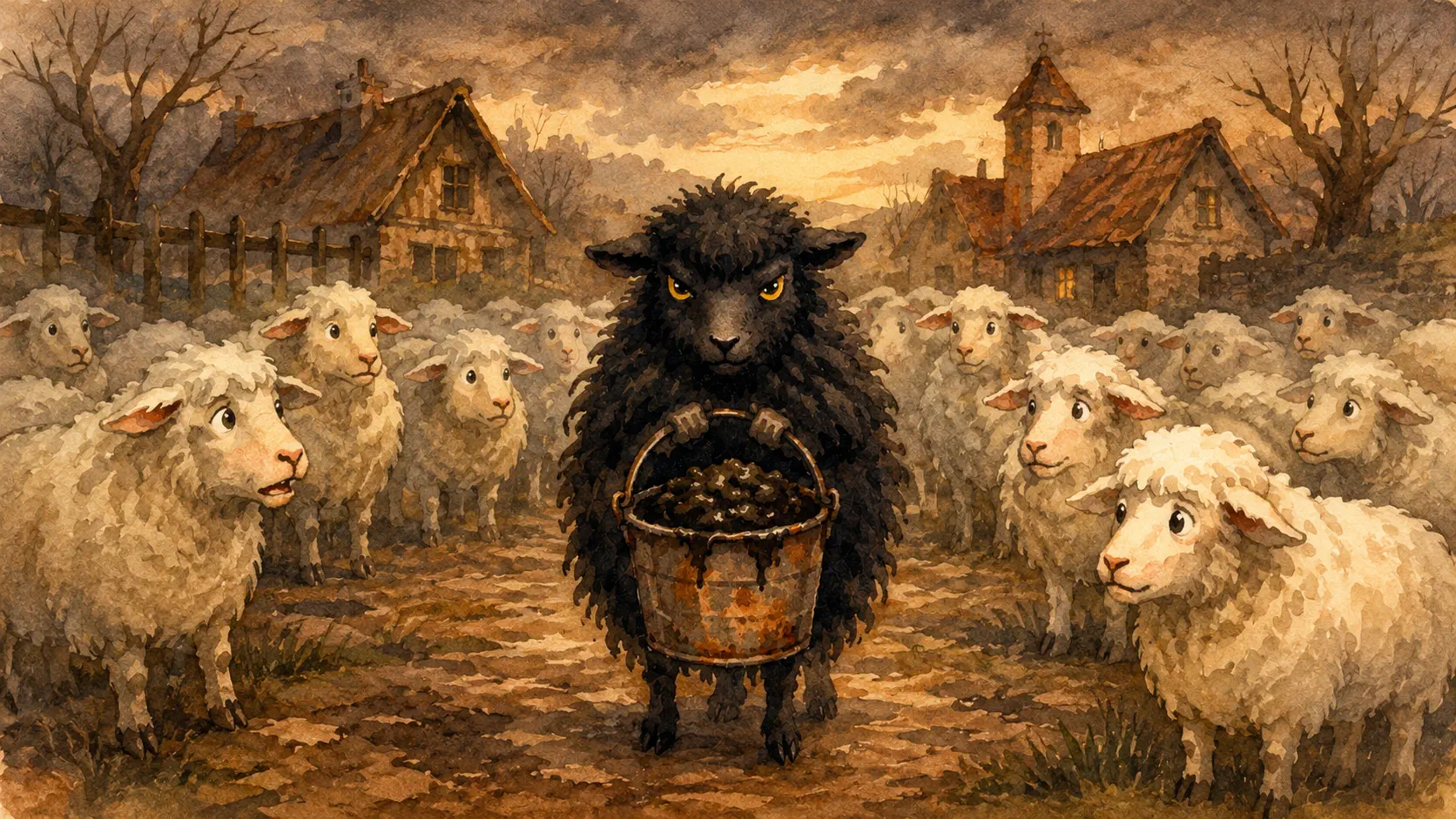
The Black Sheep with the Bucket

The Black Sheep with the Bucket

Once upon a time there was a black sheep. It lived in a village full of sheep and carried a bucket with it. A bucket of filth. Everything it had not allowed itself to be, everything the village had not wanted to see, lay in it. It could not put the bucket down. For a time the sheep thought about tipping the bucket out. Over the others. They should turn black too, it thought, then it would no longer be alone. It imagined nights in which it moved through the village spraying colour. The thought warmed and poisoned at the same time. ...

May 27, 2026 · 2 min · René Jochum

The Fools Who Look at Each Other and Recognise One Another

The fool is one of the oldest figures in human history. He goes by many names — shaman, dervish, mystic, court jester. What connects them: an inner freedom that outlasts outer circumstances. He sees differently and speaks what others leave unsaid. He cannot be bought. The fool knows the word no — toward himself and toward others. His confusion is his raw material. His clarity, the result. They are called fools. ...

May 25, 2026 · 2 min · René Jochum

A Warrior Knows Pain

A sentence everyone knows. One we heard as children when we fell, when we cried, when we were afraid. Get up. Stop making a fuss. A warrior feels no pain. I cross out the “NO.” Not because I want to destroy the sentence — but because it is the wrong way round. A warrior knows pain. That is exactly what makes them strong. The Wounds Imagine you come back from the hunt. It did not go well. You carry wounds. Real ones, not just metaphorical — though the metaphorical ones hurt just as much. Childhood, loss, loneliness. People who left. People who should have stayed. Things that happened and things that should have happened but did not. Trust that was broken. Dignity that was denied. Grief that never had a place. ...

March 13, 2026 · 6 min · René Jochum

Naming the Kowtow

Someone says yes and means no. This happens constantly — in meetings, in therapy groups, at the kitchen table. I call it kowtowing. And I am learning more and more to name it. What Kowtowing Is Kowtowing is not listening. Not thinking. Not holding back. Kowtowing is agreement without conviction — performative, automatic, conflict-averse. The mouth says yes, the body says something else. In addiction therapy you encounter it constantly. I learned it as a client — in myself and in conversations with other clients. Someone sits in the group, nods, says: “Yes, that’s right.” Sounds like insight. Is adaptation. And from that moment on, everyone is working with false data. ...

March 9, 2026 · 4 min · René Jochum