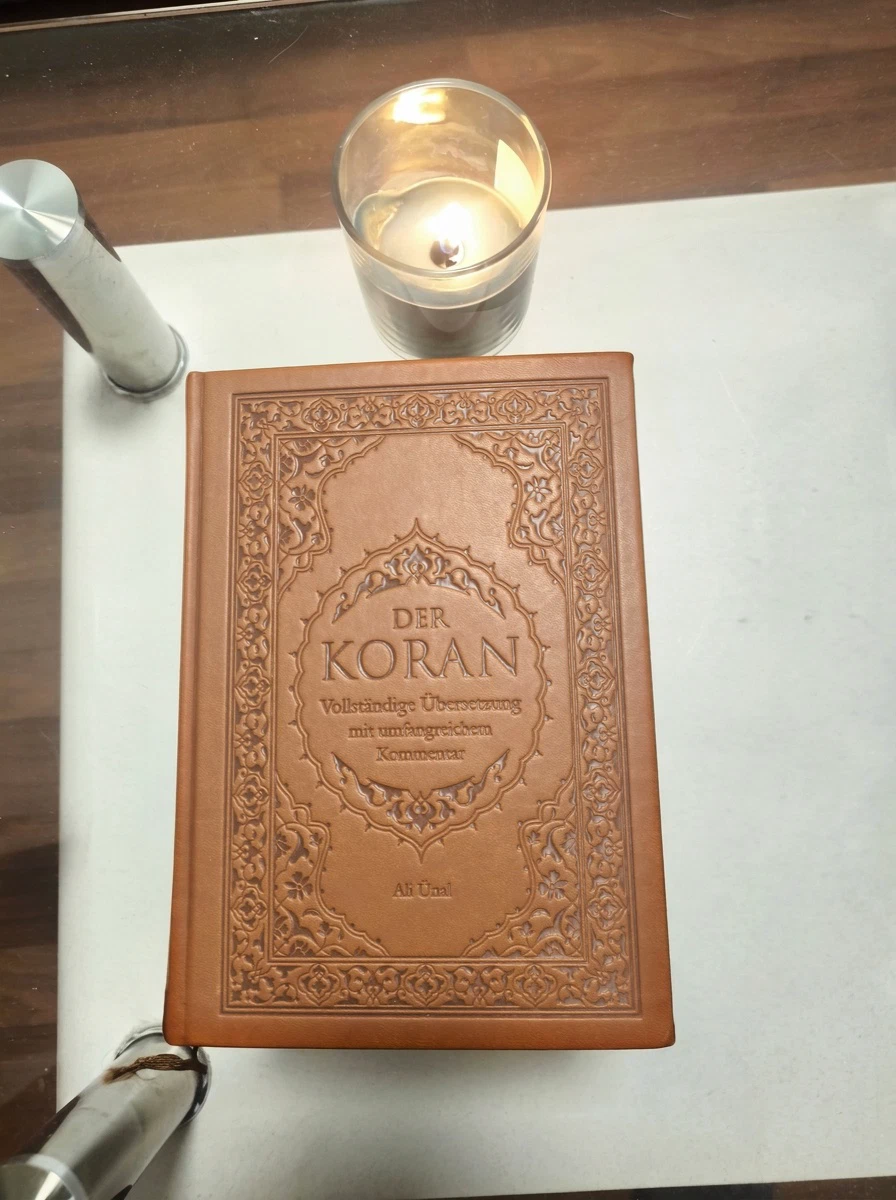
If you like, listen while reading:
You can read a thousand books about trust, debate it, or try to figure it out rationally in your head. In everyday life, we are used to thinking in terms of certainties, logic, and control. We build protective walls around ourselves so that life remains predictable. Yet what primal trust truly means is not something you grasp by thinking about it. You only grasp it in the moment when all familiar roles and certainties fall away completely.
For me, that happened in a place where some people here in Vorarlberg probably would not expect to find me at all: in a mosque, after a long prayer for emptiness and filling — asking that my own ego be emptied out and filled with His goodness instead. Empty ego, full goodness.
In the middle of that stillness, once my own will finally made room, there was no stern judge, no verdict, and no coldness. With Allah, I felt as if in a mother’s womb — floating, cared for, loved. In Arabic, there are two closely related names among the 99 beautiful names of Allah for this exact experience that have stayed in my heart ever since: ٱلرَّحْمَـٰنُ (Ar-Raḥmān — the All-Merciful) and ٱلرَّحِيمُ (Ar-Raḥīm — the Merciful).
Linguistically, both share the very same root as the word for a mother’s womb (raḥim). While Ar-Raḥīm describes merciful care in concrete action, Ar-Raḥmān stands for the nature of the source itself: an all-encompassing mercy that applies to all creation without precondition. Not grace handed down from above that you first have to earn by being good, but an original state of being held safe — the immediate knowledge of being completely meant, held, and accepted, without any precondition.
And that shelter did not remain a mere word there. A brother simply said to me: “Please come back tomorrow.” In this mosque, I am allowed to be like at Mama’s — and, just like at Mama’s, I am allowed to stick to the rules.
Anyone who experiences something like that still does not simply return to everyday life as a finished, enlightened human being. Quite the opposite.
At first, the dense veil of shock, state of emergency, and crisis lay over everything for a long time. What had been experienced was vast, while my own life was simultaneously full of shards that first had to be sorted out.
Only later, as that veil slowly receded, did what had been waiting quietly underneath all along step forward clearly again: the sense of being held safe in that prayer had not been a fleeting dream. It was more real than fear.
Having such an experience is one thing. Translating it into an ordinary, grounded life is the real work.
Because a single great moment does not automatically carry you through a gray Tuesday morning, through human disappointments, through self-doubt, or old shadows. This primal trust had to sink into my everyday life step by step — simply and without grand spiritual theater:
- Learning mercy inward: If this source (Ar-Raḥmān) is unconditionally merciful, why do I still judge myself so harshly? Often we find it easy to stand by others in their fragility while being ruthless with ourselves. Living primal trust meant first allowing that gentleness (Ar-Raḥīm) toward myself as well: standing by my rough edges and mistakes without questioning my worth as a human being.
- Trusting my own compass: With primal trust grew the quiet certainty that my inner compass is true. You stop overthinking every feeling out of insecurity or constantly looking for validation on the outside. When the foundation holds, there is no need for complicated mental constructs anymore. It is allowed to be simple and clear.
- Less clinging, less control: Anyone who knows deep down that there is solid ground that holds no longer has to keep life in a chokehold. “Zfrieda muss ma si” (You have to be content). For a long time, I only heard that as modesty. Today I know what deep primal trust lies within it: being at peace with what is. Fear does not vanish overnight, but it loses its sharp bite.
- Recognizing that shelter in the small things: Over time, this feeling stopped being merely the memory of an exceptional moment. It became quieter, more grounded, and suited for everyday life. I feel it today when I roll through the neighborhood outside, in the silence on a bench, in an honest conversation over a cup of coffee, or while laughing together at the kitchen table.
Primal trust fits into no box and belongs to no single institution alone. For me, it found its expression in ٱلرَّحْمَـٰنُ (Ar-Raḥmān): as the quiet, grown knowledge that beneath all our noise, our fears, and our shadows lies a merciful source that does not let us fall.
By René Jochum - LLM Translated. License: CC-BY-4.0.