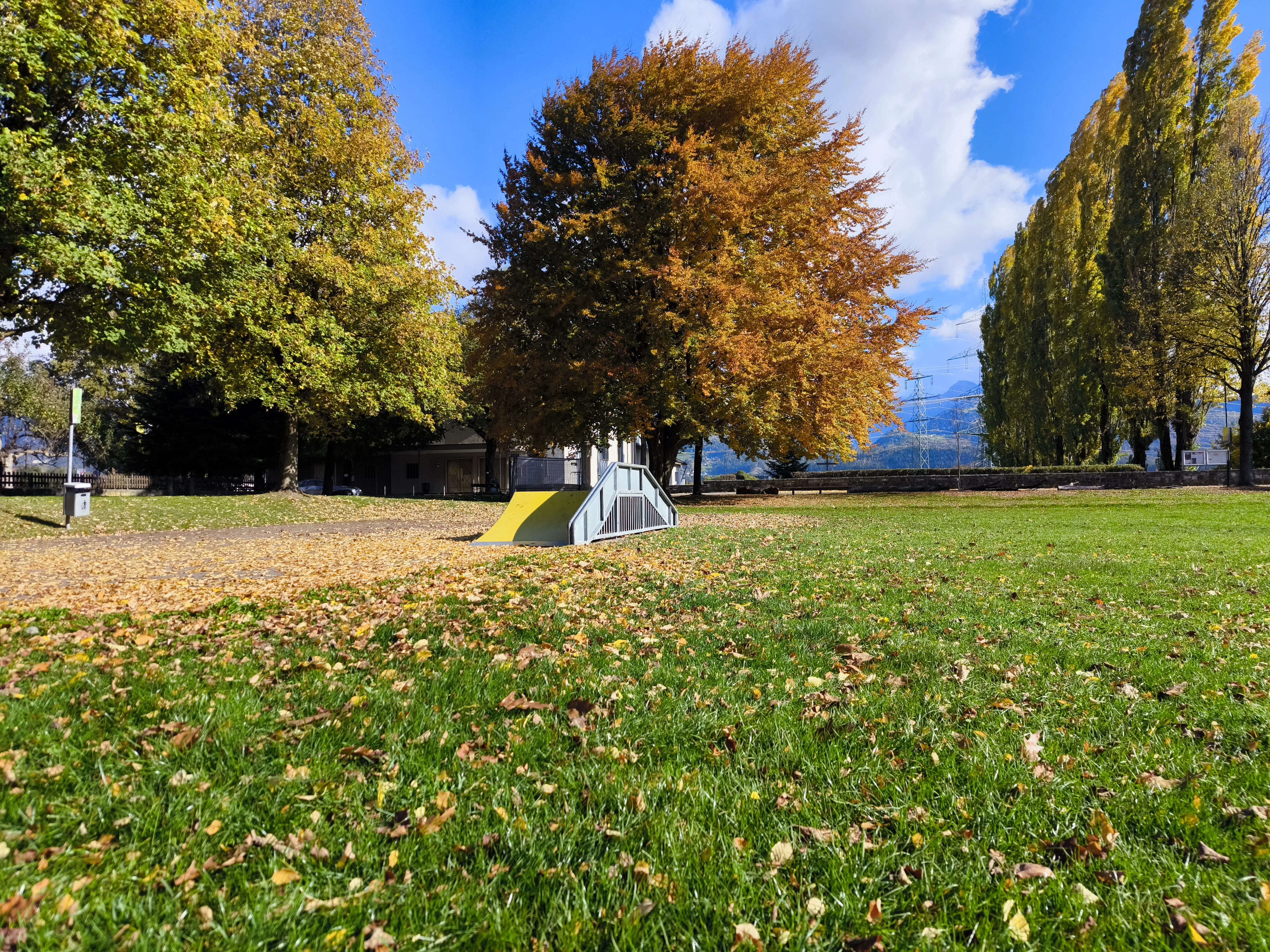
Back in the nineties and early two-thousands, every skatepark had that one group of guys. They were the untouchables. The ones to whom everything seemed to come effortlessly, who threw themselves down every set of stairs, wiped their scraped hands briefly after their tenth slam on the asphalt, and simply kept going. They had that “all-or-nothing” fire in their eyes that drew everyone else in like a magnet.
I wasn’t standing out there on the plaza with them back then. I was sitting at home in front of my computer. Two completely different worlds sharing the same town.
Today, at forty, I sit at the table with some of them again. The very ones who were the most fearless back then are fighting the heaviest addictions today. The same mind that knew no half-measures on the board knew no limits in intoxication either. Except that the floor in addiction is not made of concrete you can simply push yourself up from after impact and walk away. Some are still fighting in the “hole” today while the world outside simply kept moving — and they deserve every chance.
There is nothing wrong with the desire to be cool — quite the opposite. The rough-and-tumble among boys, testing your strength, having the courage to jump, and pushing your own limits make us stronger. We need that friction in order to grow. It only becomes dangerous when you miss the point where you are allowed to simply be content with your coolness. When courage turns into an endless compulsion to always take things one step further — or when coolness serves only as armor to find a single moment of quiet from the noise inside your own head.
And where genuine guidance is missing, boys quickly confuse this armor with blunt provocation. Recently, a teacher told me that a few students in his shop class seriously wanted to build a replica of a concentration camp. They reach for the cheapest and cruelest taboo-breaking because they think shocking people already counts as strength or rebellion. But that is neither tough nor cool — it is pure inner disorientation hiding behind spiked armor.
Right here lies the blind spot when we look at the teenagers standing on the plazas today at fifteen or sixteen with that same hunger for intensity.
When an adult who only knows risk from brochures wags a finger at them and explains that substances are dangerous, they tune right out. Whoever is wild and testing their limits cannot be slowed down by arguments of reason. They look for role models with an edge. And if the only wild role models on the street are the ones who know no measure and destroy themselves, the young mistake the crash for freedom.
Yesterday, in a shop nearby, I ran into someone who knows both sides. A presence nobody overlooks, someone who went through deep crashes himself — yet someone who turned the corner, is still here, and stands upright in life today.
I asked him for a single favor: “Please teach the young ones how to be cool and grounded.”
He didn’t think long, didn’t debate, just nodded: “Yeah, I’ll do that.”
That is the exact task of those who are still here. They are not therapists and do not replace professional help when someone is already deep in addiction. But they stand in a place no educator can reach: right in the middle of real life, before the free fall even begins.
Young people listen to those who have walked through the fire themselves and still have solid ground beneath their feet today. When someone like that shows without big words that you can be nonconformist, loud, and free without selling yourself to a substance, he strips the crash of its false romance.
The scars of the past were not in vain if they become a shield for the next generation today. We don’t need moralizers on the plazas — and we also need open spaces instead of locked doors. We need those who are still here to show the young how to land on both feet after the jump.
By René Jochum - LLM Translated. License: CC-BY-4.0.